

🧠 Inside the Blueprint: The 7 Structural Profit Leaks Revealed
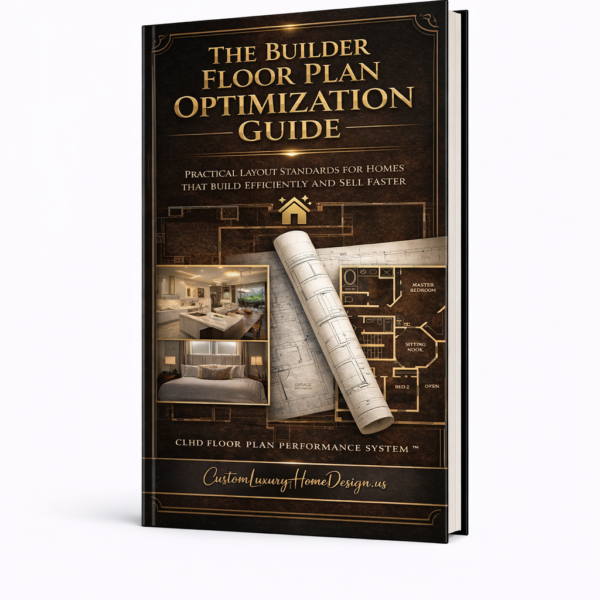
This book moves past generic design theory to target the precise structural, financial, and operational mistakes that break construction schedules and deplete your margins:
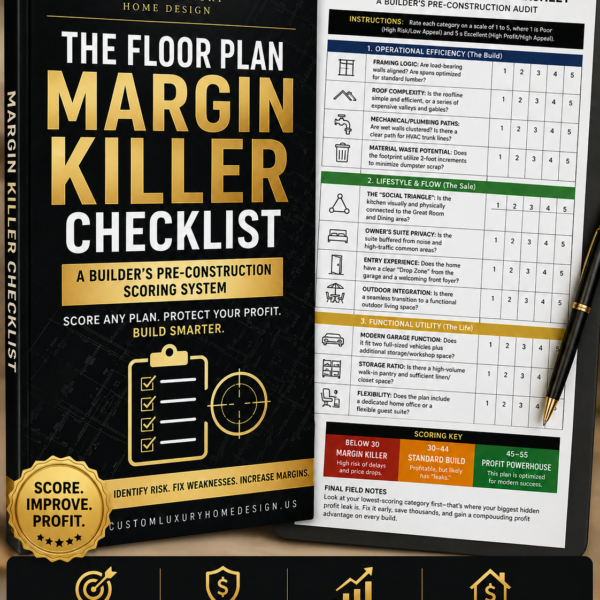
📐 1. Over-Complicated Roof Massing & Framing Logic
- How intricate roof profiles quietly compound truss engineering overhead, complicate waterproofing, and drive up framing labor costs without boosting street-side curb appeal.
📦 2. The Liability of “Dead Equity” & Wasted Volume
- A systematic breakdown of how to identify deep structural corners, oversized corridors, and awkward floor-plan dead zones that steal material dollars while providing zero lifestyle utility to the buyer.
🍽 3. Failing the “Great Triangle” Layout Rule
- Master the precise programmatic connectivity rules required between the kitchen culinary hub, dining spaces, and primary living volumes to maximize perceived openness and spatial flow.
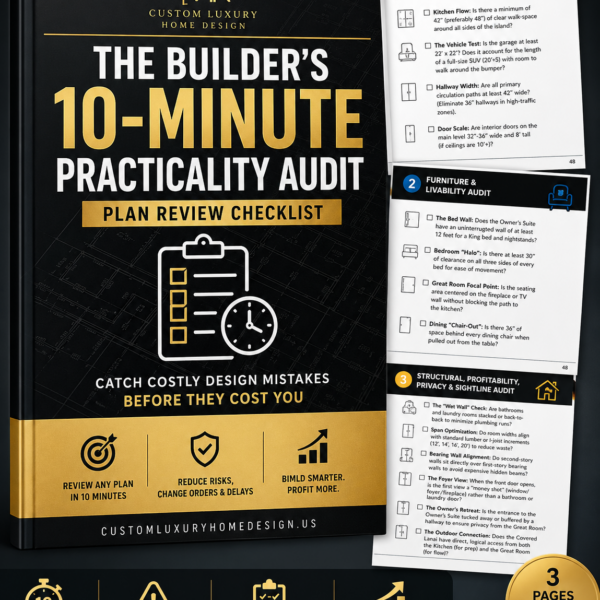
🚗 4. Improper Programmatic Clearance & Scale
- Why generic plans fail real-world dimension tests—specifically focusing on luxury vehicle clearances, garage turning radiuses, and tight kitchen island pinch points.
🏗 5. Poor Vertical Load Path Alignment
- How uncoordinated point loads force expensive, reactive field fixes like unplanned engineered headers, steel columns, or massive foundation footings that destroy your initial estimate.
🚽 6. Fragmented MEP Trade Paths
- The financial consequences of scattered plumbing groups and unaligned multi-floor wet walls that unnecessarily inflate subcontractor labor and material expenses.
🏡 7. Misaligning Layouts with Modern Buyer Demands
- How to avoid outdated programmatic layouts by mastering acoustic isolation for the owner’s suite, seamless indoor-outdoor transitions, and integrated flex-space adaptability.
🎯 Build Faster, Standardize Early, and Control Your Pipeline
Every structural oversight caught during the design development phase costs absolutely nothing to fix. Catching that same mistake on the field results in defensive client updates, scheduling delays, and line-item margin loss. This guide transforms your plan review process into a strict, disciplined pre-construction habit.
👉 Turn your design process into your primary competitive edge. Stop building un-optimized prints and start building predictable, high-performance residential products.



Mark D. – Custom Home Builder –
“This book completely changed how I look at floor plans. We caught two major layout issues on our next build before framing—and saved thousands.”
Jason R. – Residential Developer –
“The ‘profit leaks’ concept is real. I’ve been building for years and didn’t realize how much money was being lost in the design phase.”
Anthony L. – Spec Home Builder –
“After applying just a few of these principles, our last home sold in under 2 weeks. The layout just felt better to buyers.”
Chris M. – General Contractor –
“Super practical. Not fluff. This is stuff you can actually use on your next build immediately.”
Daniel S. – Builder / Investor –
“The section on wasted square footage alone is worth the price. We redesigned a plan and increased perceived value without adding cost.”
Kevin T. – Custom Builder –
“This helped me communicate better with my designer and subs. Fewer questions, fewer issues in the field.”
Brian H. – Luxury Home Builder –
“The ‘flow’ concepts are spot on. Buyers may not explain it—but they feel it. This book shows you how to design for that.”
Ryan P. – Residential Builder –
“I wish I had this 5 years ago. Would’ve saved me a lot of headaches and change orders.”
Steven K. – Developer –
“The biggest takeaway: design is not just design—it’s profit strategy. That shift alone is huge.”
Michael B. – Home Builder –
“Clear, direct, and extremely valuable. This is now part of our pre-construction process.”
Tyler G. – Spec Builder –
“The curb appeal and layout sections helped us differentiate our homes instantly. We’re no longer competing on price alone.”
Eric W. – Contractor –
“This isn’t just for designers—it’s for builders who want control over their projects and margins.”